The Ants Outweigh The Elephants
A good friend and yoga teacher once offered me one of the most profound pieces of advice I’ve ever received. He said simply,
“Find your roots, bro.”
This was just before Covid.
At the time, I was nursing a dislocated shoulder that had frozen almost completely due to the extent of the damage. Like many moments before it, life had once again found a way to force me to slow down — and begin repairing years of quiet self-neglect.
During some of my previous travels, I had also picked up good old H. pylori.
Rather than treating it conventionally, I began learning enough about nutrition and the body to heal myself.
That single act started a process that continues to this day.
It prepared me — unknowingly — for many more thresholds.
Including the patience required to live among people who eventually grew tired of listening to me share the endless stream of ideas that had suddenly begun flooding into my psyche.
Roots huh?
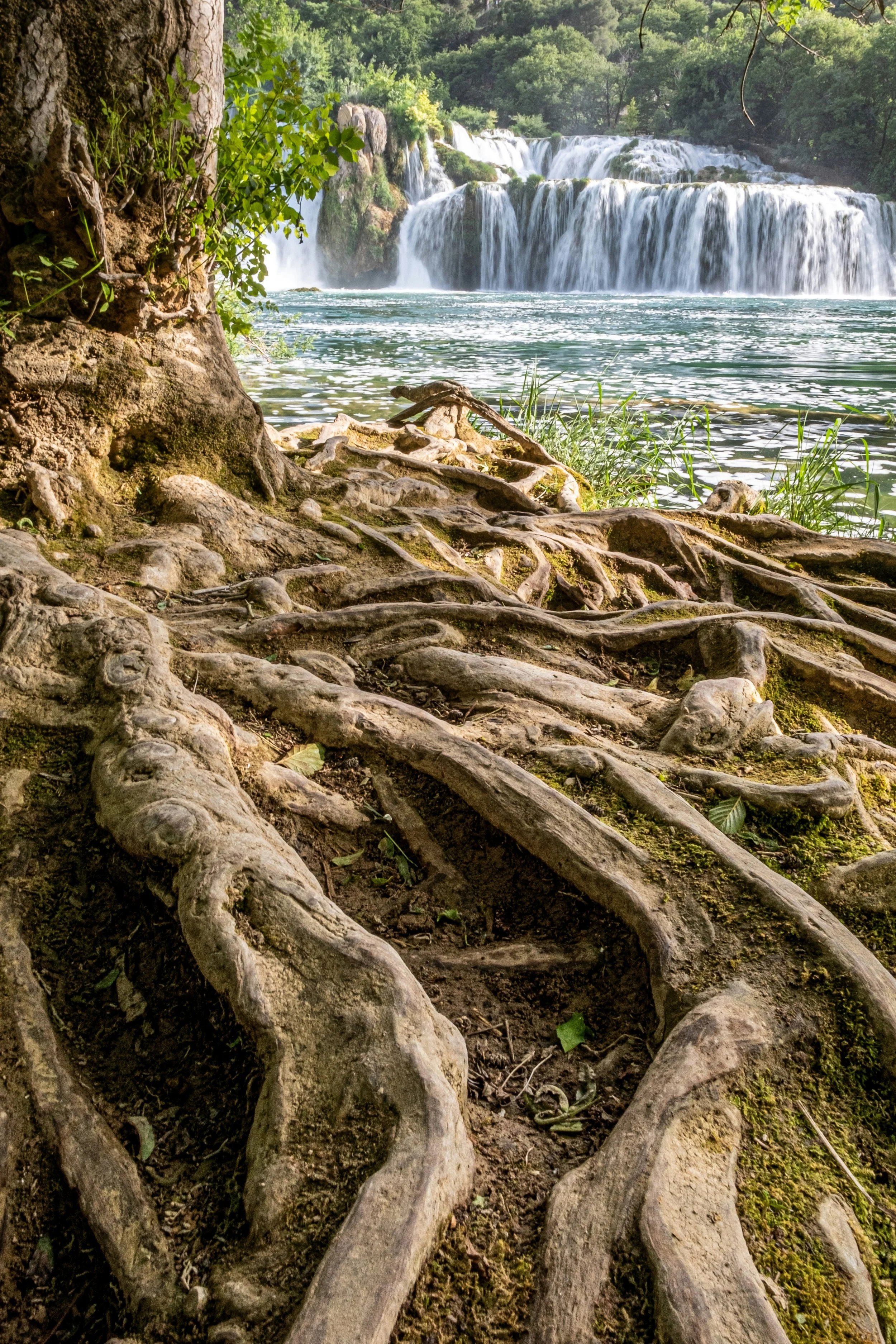
The first thing that comes to mind is the mycelium network that burrows beneath our very feet.
You see, each plant, tree, fungus — and yes, even your food — relies on this unseen conduit, where individual needs quietly benefit the collective as a whole.
We’ll come back to this, because it forms one of the core foundations of how our planet coexists with its inhabitants.
Right away though, I began somewhere more personal.
I used my sister’s 23andMe information and eventually my own to explore where our family’s bloodline originated. In a nutshell, Druid lineages appear to represent the majority of our shared ancestry.
There are small percentages, however, that trace back to Africa also.
And it may interest you to know that — much like how little we truly understand Druid traditions — Africa was not its original name either.
I encourage each of you to take the same advice — to find your roots as well.
There is one unifying thread that seems to connect us all though, music.
Much of what I know did not always come from books.
It came from lyrics.
From artists, poets, directors — and often from strangers I happened to meet on a plane ride.
This way of learning ties beautifully to the answer one of my favorite teachers gave when asked, what we are here to do.
He said simply,
“All we’re here to do is walk each other home.”
So then the question becomes…
What is home?
This idea lives less in thought and more in feeling.
It asks something of us at the soul level — something that must be sensed before it can be understood, and metabolized before it can be explained.
Home to the Druids was held within their ancient oak forests, where land itself was considered teacher, temple, and memory. Their wisdom was not written, but carried — passed through generations by way of story, poetry, law, ritual, and song.
This vast oral tradition formed a living network, not unlike the mycelium beneath our feet today — an unseen system through which knowledge, culture, and identity quietly traveled from one community to the next.
Long before roads and empires, this network extended across much of what is now modern-day Europe and its surrounding regions. Through it, law was remembered, lineage preserved, healing practiced, and cosmology taught.
What little remains suggests these societies organized not around conquest, but around continuity.
To this day, small pockets never fully let go.
And even now, these Celtic traditions continue to evolve — not as nostalgia, but as quiet forms of cultural remembrance, often resurfacing as relief from centuries of colonial rule.
Throughout history, colonial rule has shaped — and continues to shape — much of what we now call modern society through dominant cultures and centralized systems of power.
Empires would later try to replace these networks with roads, borders, and administrations.
But something essential was already being carried in ways no empire could fully erase.
It is often referred to as civil coexistence.
I once read a quote that has stayed with me ever since. It said simply,
“There is enough for every man’s need, but not for every man’s greed.”
This truth is instinctively understood by the majority of species on this planet.
And yet, fear — especially when organized into systems — has a way of shaking this foundation to its core.
Recently, this very system of civil coexistence began to quietly take over the bubble I had been living in.
Of course, I had always known of it.
But I had been disconnected from my own center just enough that I could tolerate it without truly seeing it.
As I began healing from the inside out, something subtle shifted though.
What once passed as medicine now began to feel like poison.
Unbeknownst to me at the time, threads of truth started appearing from every direction — as though emerging from a 360-degree epicenter.
And one word kept returning.
Africa.
A name given through colonial rebranding, meant to flatten and fragment a vast continent of humanity’s earliest cultures - cultures rooted in the very civil coexistence we just spoke of.
Long before borders, many of these societies organized around kinship, land, elders, and continuity — systems that did not require an empire to survive.
Remember this name.
Because its renaming marked the beginning of a long interruption.
And now… that interruption is quietly being questioned.
Burkina Faso. 🇧🇫
What the Druids — and the people of Alkebulan, the original name often given to Africa, meaning “Mother of Mankind”or “Garden of Eden” — endured through centuries of disruption has done more than shape history.
It shaped identity.
Fear, once introduced, became an efficient tool.
As one lyric quietly reminds us,
“They’re drilling for fear.”
And fear, once organized, always seeks weight, momentum, and scale.
Who are the fear drillers?
Their weight, their force, their momentum — it often resembles the blind trampling of elephants moving through fragile systems.
And yet…
What they never fully erased — and may only now be beginning to remember —
is that the spirit of the ants remains alive in each of us.
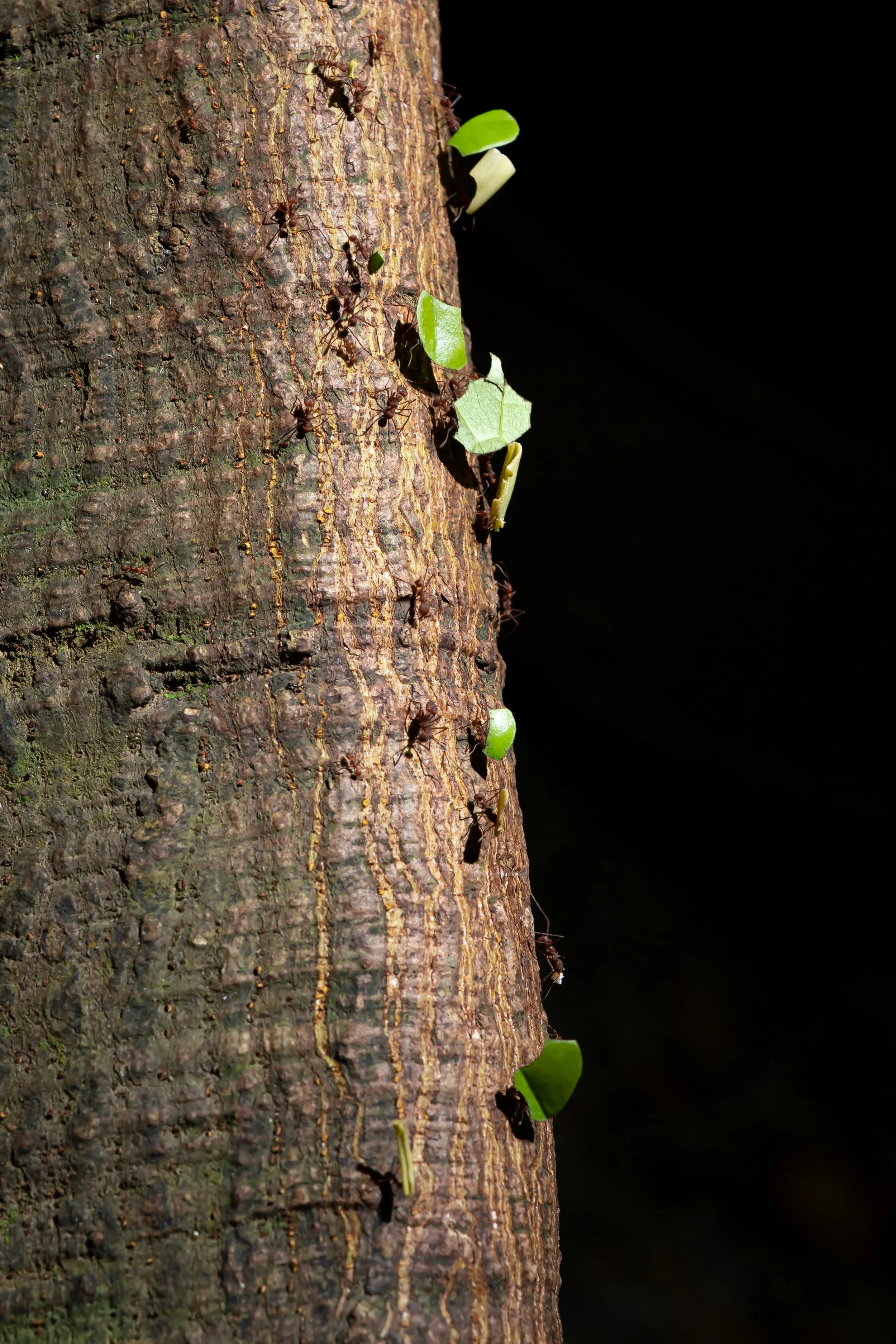
We all know, from our many and diverse feed sources, the destruction — both direct and inadvertent — that follows under the weight of these elephants.
Often disguised as progress, stretching from sea to shiny see.
Their path is visible.
It appears in homelessness.
In overcrowded prisons.
In landscapes stripped and exhausted.
In people increasingly medicated, distracted, and quietly addicted to being unwell.
And still, it is called success.
Yet somewhere beneath all of it, quieter systems continue doing what they have always done — trying to keep life going.
This is why remembering Burkina Faso matters.
Approximately four years ago, they began a quiet movement toward sovereignty — one very reminiscent of an ant colony organizing itself beneath the gaze of towering elephants.
While the largest of herds stood over them.
It reminds me of a joke.
What did the elephant say to the man standing below him?
“How do you breathe with such a small trunk?”
And the answer, it turns out, has become something very real:
We can breathe better together
than we ever could alone.
Yes, in truth, we are born alone and we will die alone.
That is both the good news and the difficult news —
because it reminds us that everything, without exception, is temporary.
So how do we live with this
while elephants are quite literally standing on our backs?
It is easy to speak about presence.
Much harder to practice it though.
And yet, again and again, the invitation remains the same:
To be here now,
not there then.
and most importantly not somewhere we were never meant to carry.
To carry something that belongs to you is one thing.
But the weight of an elephant requires more than one — and often, those sharing the load do not even realize they are carrying it together.
We are reminded of this in strange ways.
You’ll see slogans telling us it either tastes great or it’s less filling.
Someone asks, “Where’s the beef?”
And before long, the missing beef becomes a cocktail of medical bills.
All of it created by us, for them,
despite our undeniably similar — yet beautifully diverse — cries for sovereignty.
Years ago, I learned that Nixon’s administration established what became known as the “nation-to-nation” policy with the Indigenous tribes of what we now call home.
And yet, the word nation itself has baffled me ever since.
It was in this same class I was reminded of a philosophy I had been taught while serving in the military:
“Not on my watch.”
With that, we are invited to accept the past as it is —
not as approval, but as a learning ground.
Along this thought pattern I love considering everything that has happened as perfect.
Not because it was painless.
But because, in truth, anything that has happened could not have happened any other way.
I had the perfect first kiss.
And, strangely enough,
the most perfect divorce.
So how does one even begin to arrive at this perspective?
Everything I’ve written may be easy enough to understand.
But application is where the real work begins.
Like anything worth doing, this path requires effort.
Let me ask you something gently.
How hard have you worked while carrying the kinds of loads I’ve described?
How much study did it take?
How much practice?
How much of yourself do you still get to keep?
I already know your first answer.
And I suspect you also know the quieter, more sovereign one beneath it.
Because this is the point of no return.
Once you recognize something this universal — this aligned within the colony —
you cannot truly unlearn it.
So perhaps now is the time
to begin studying, practicing, and remembering who you already are.
Not what the heavy steppers want from you.
But what you know,
and what your colony quietly sees in you.
Self-awareness.
And the unconditional self love it slowly learns to metabolize.
And yet, quietly, in a few small places, something different has already begun.
In the last four years, in a country few of us had never paid much attention to before, a subtle reorientation has been unfolding.
Not through conquest.
Not through empire.
Not through fear.
But through sovereignty.
In Burkina Faso — a name that itself means “Land of Upright People” — efforts have turned toward protecting land, reclaiming resources, feeding communities, educating youth, and restoring dignity to systems long organized around extraction.
What is striking is not any single policy.
It is the orientation.
Toward people before profit.
Toward continuity before conquest.
Toward land as kin, not commodity.
And perhaps what matters most is this:
These changes are not being built for one species alone.
They are being built with soil, water, forests, children, elders, and future generations in mind.
This is what a healthy colony looks like when it remembers itself.
You do not have to agree with every choice.
You do not have to know every detail.
But simply allowing your system to witness that something different is possible,
changes what your imagination believes is allowed.
And once the colony remembers that alternatives exist,
even elephants begin to lose their inevitability.